

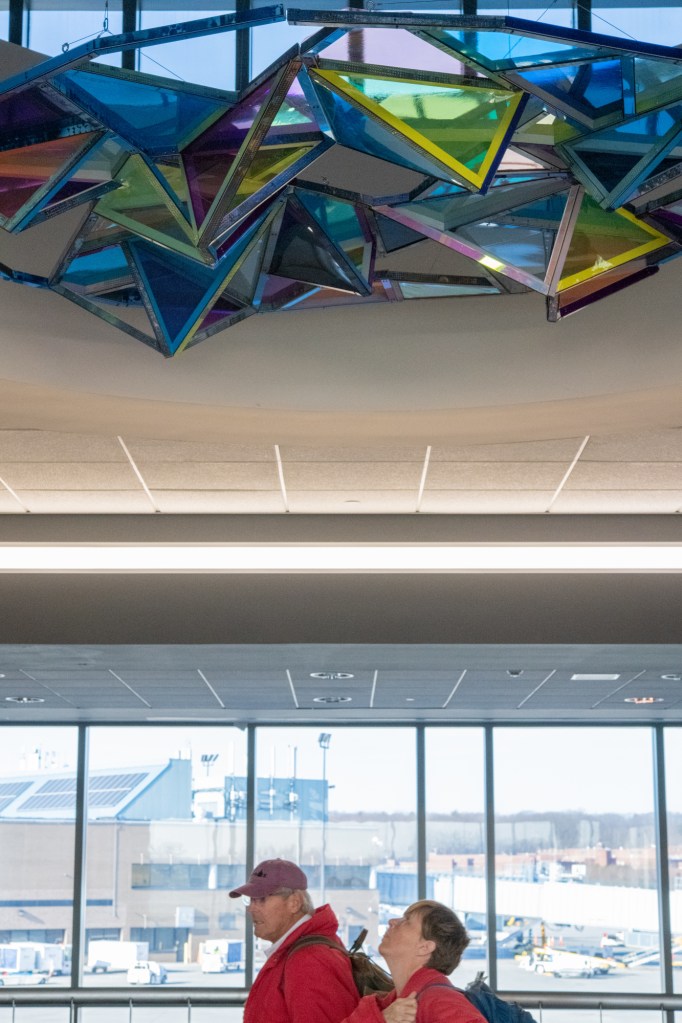
Susan Meyer
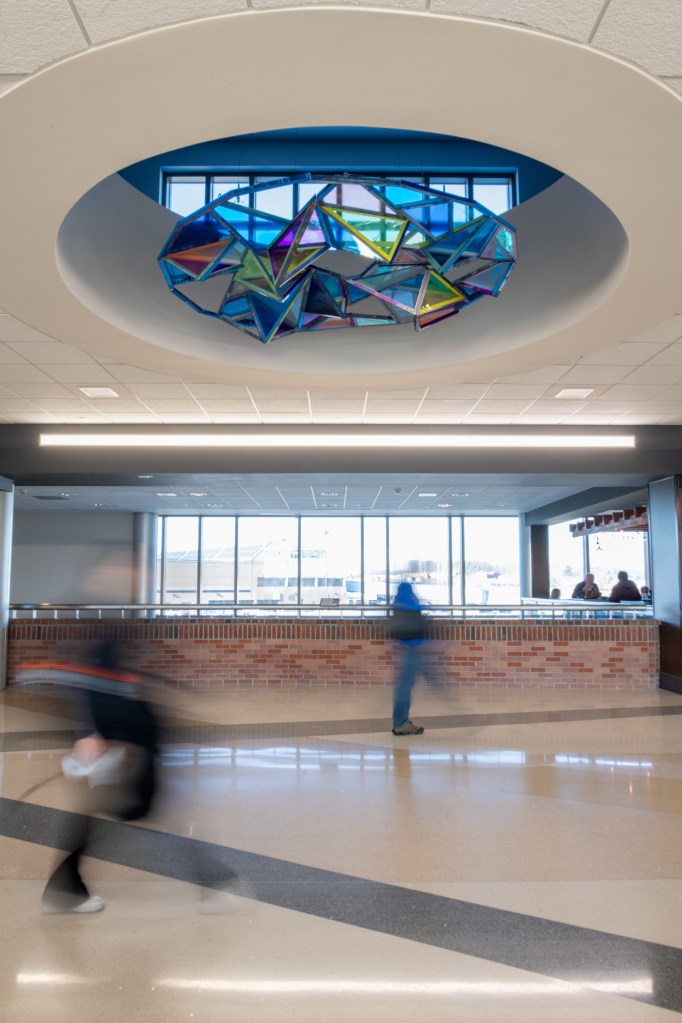
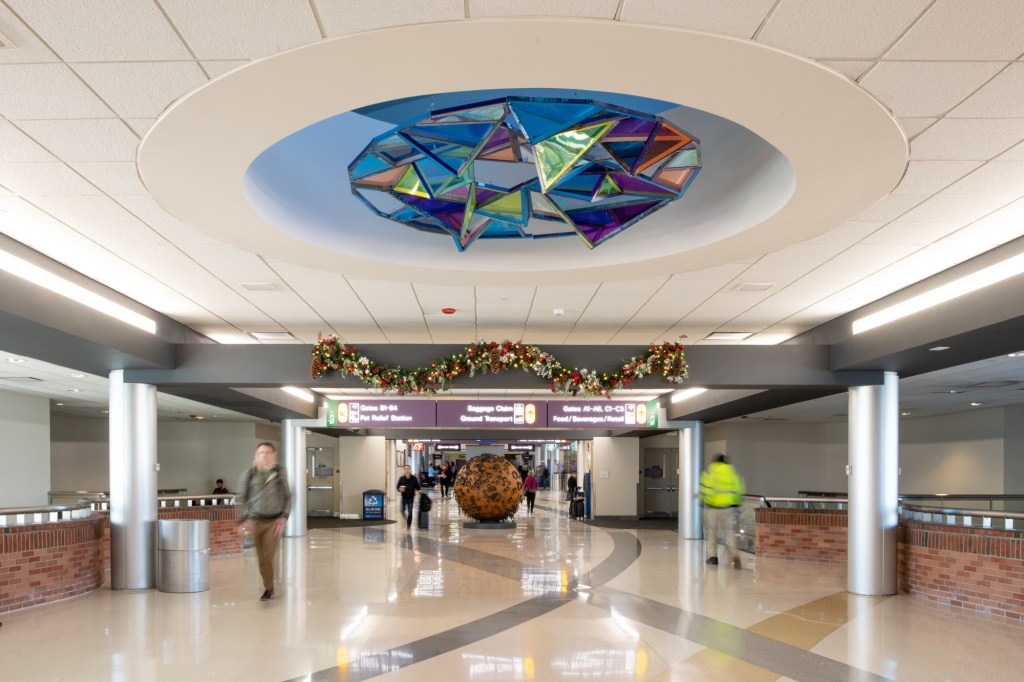
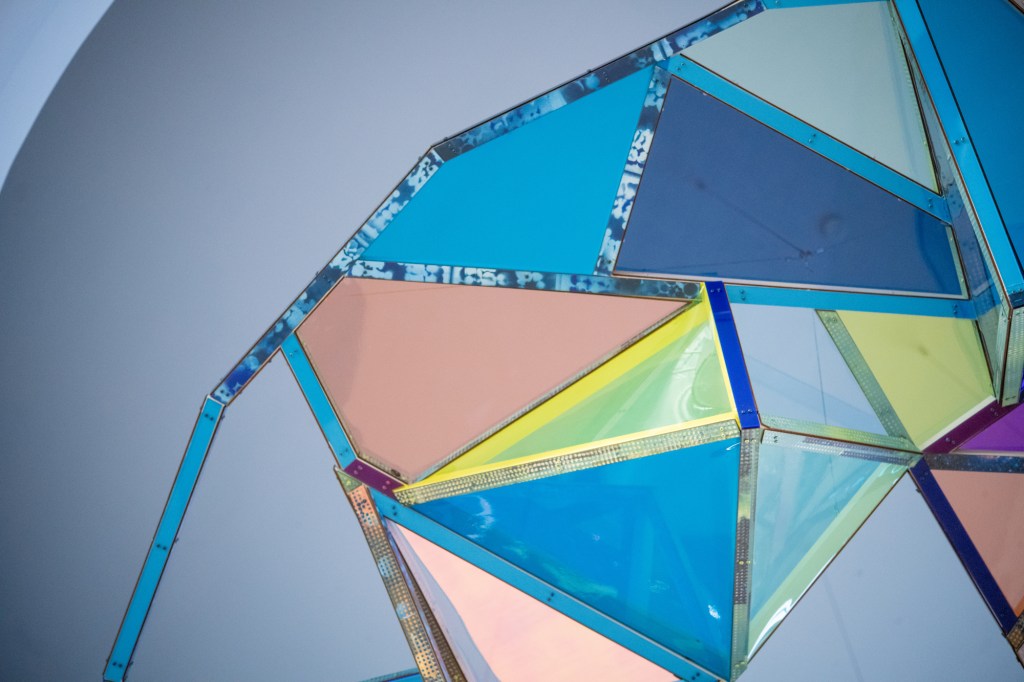
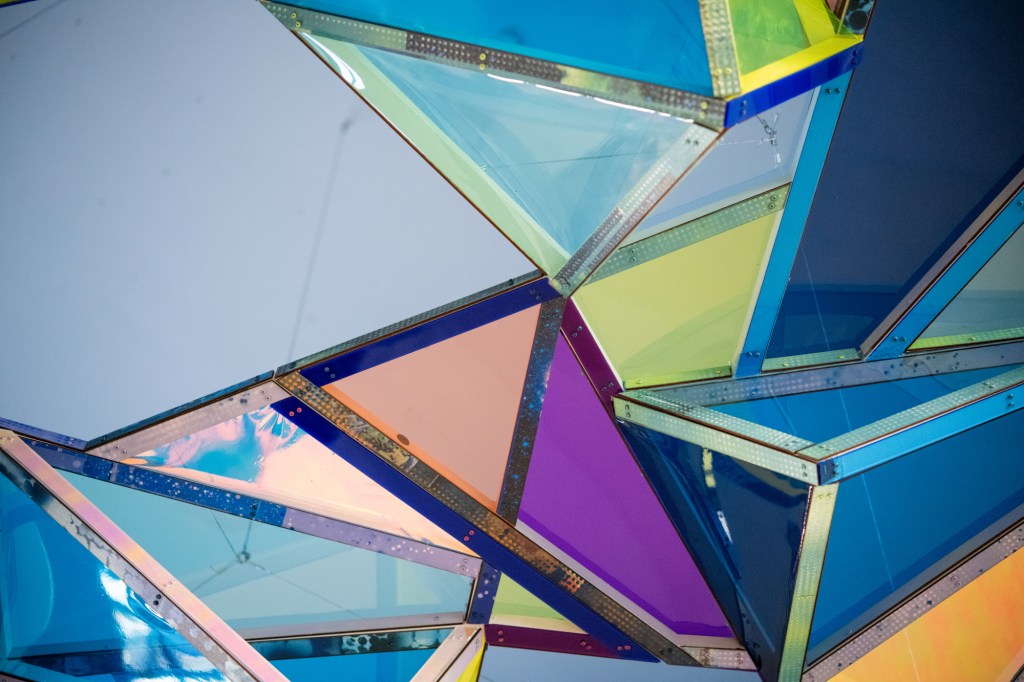
Blue Portal
Wood, acrylic, transparent vinyl
2023
Artist Susan Meyer is influenced by utopian communities and their histories in this country. Her pieces suggest the forms and palettes of ’60s era experimental communities and of Modernist architecture and design. Blue Portal emulates the visual dynamic of Drop City, an early commune in Trinidad, CO; for homes, Droppers created variations on the geodesic dome using multi-colored car hoods reclaimed from a nearby junkyard. In addition to channeling Drop City, the palette and collage work on the structure’s cladding loosely reference imagery from the night skies. The desire is to convey something of the sense evoked while looking out an airplane window on a particularly lovely day in the clouds; as well, to channel the optimism of the young Droppers at the outset of their adventure, hoping to create a new and better world.
Susan Meyer received her BS in art from Skidmore College and her MFA in studio art from the School of the Museum of Fine Arts at Tufts University. Her work has been featured in solo and group shows across the United States, including The Tang Museum at Skidmore College, Saratoga, New York; The Korean Cultural Center, New York, New York; Fridman Gallery, Beacon, New York; Flinn Gallery, Greenwich, Connecticut; Woodstock Artists Association and Museum, Woodstock, New York; Courthouse Gallery, Lake George, New York; Thompson Giroux Gallery, Chatham, New York; Plus Gallery, Denver, Colorado; Boulder MOCA, Boulder, Colorado; The Museum of Contemporary Art, Denver, Colorado; and many others. She has held residencies at Anderson Ranch Arts Center, Snowmass Village, Colorado; Sculpture Space, Utica, New York; Ucross, Clearmont, Wyoming; among others. She teaches at Monmouth University in New Jersey and lives and works in Hudson, New York.
For more about the artist visit: susanmeyersculpture.com or @suzetmeyer
Concourse B
Photos by Beth Mickalonis




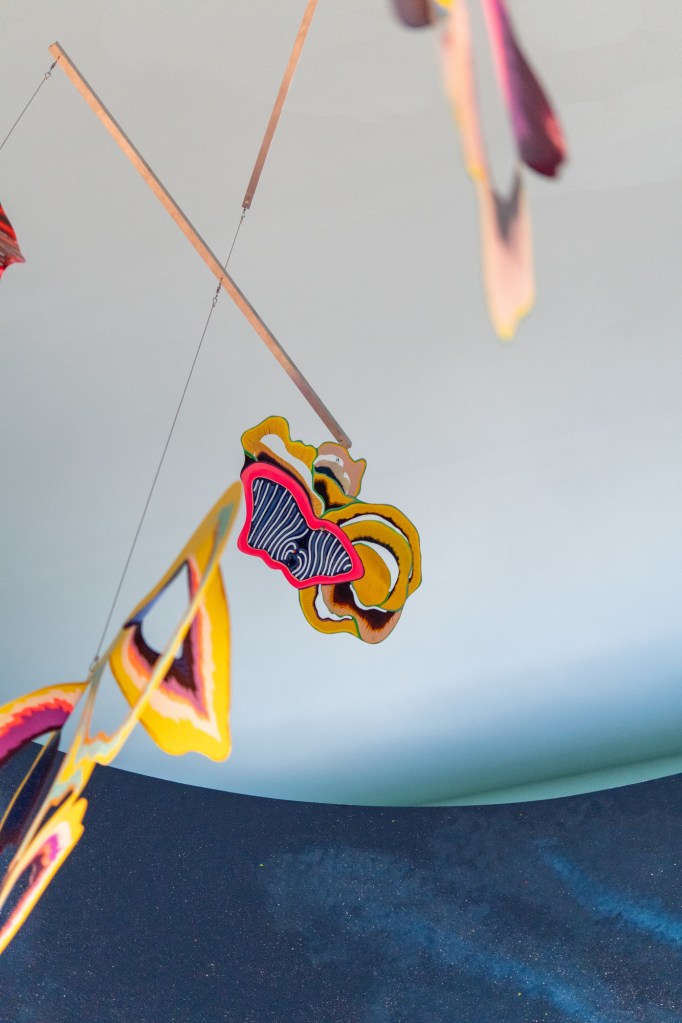
Donnabelle Casis
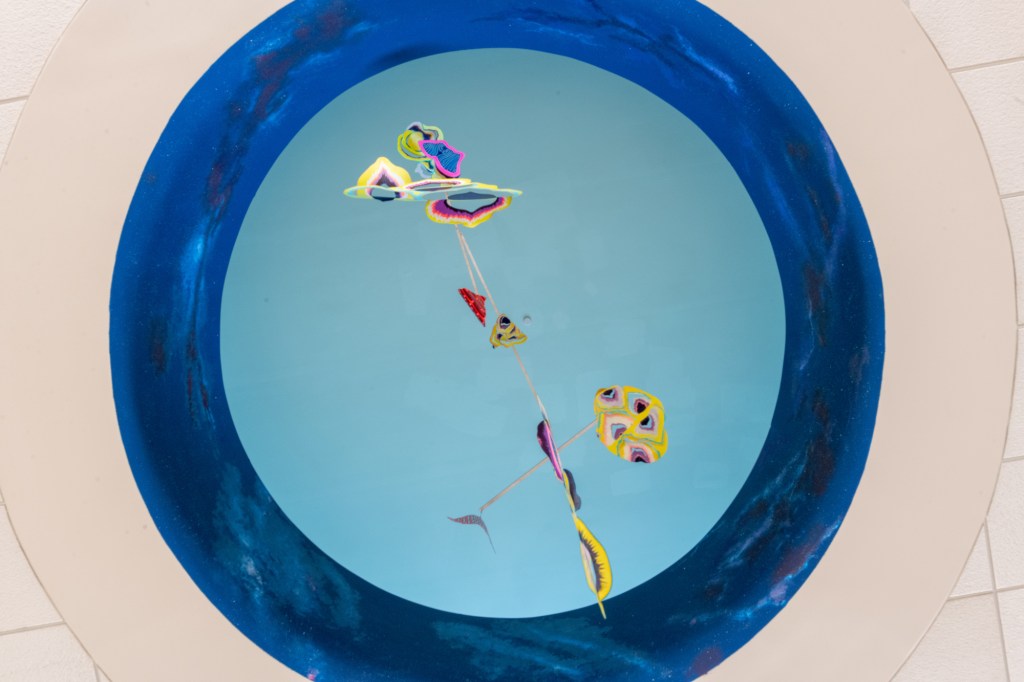
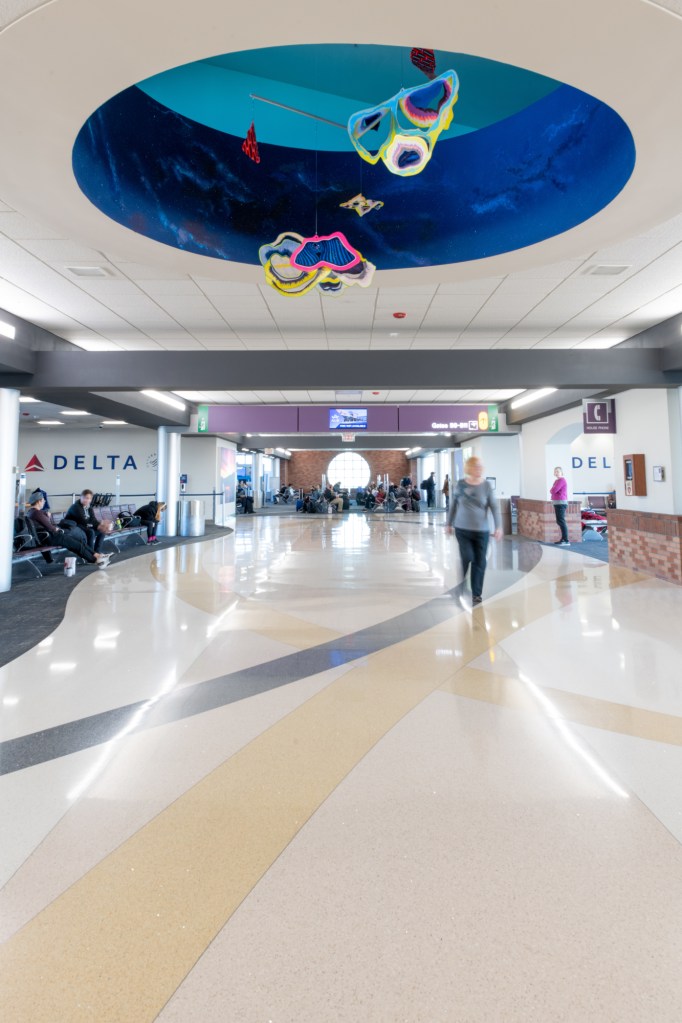
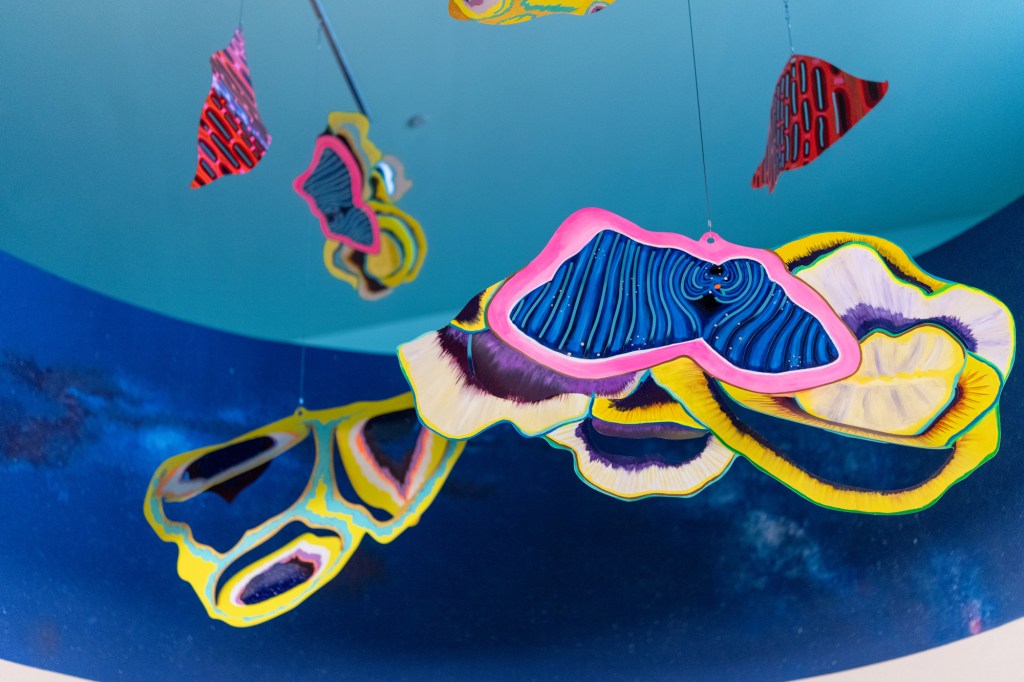
Transcendence
Mobile: laser cut aluminum sheet, acrylic paint, aluminum rod, wire cable
Mural: acrylic and latex paint
2023
This installation combines a hand-painted rendering of the night sky surrounding a vibrantly painted kinetic mobile. Together these reflect the artist’s fascination with the very personal and corporeal symbols and patterns of Filipino tribal tattoos and textiles in concert with the cosmos and its furthest reaches of human experience. Casis explains, “I draw from my cultural heritage to speak about the intricacies of personal identity. Filipino tribal imagery is tied to storytelling, marks of accomplishment and societal roles. This investigation helps me understand my place in the world and beyond.
Donnabelle Casis is a Filipina-American artist living and working in Western Massachusetts. She earned an MFA in painting from the University of Washington in Seattle. Her work has been exhibited in museums and galleries across the US and abroad at venues including the Museum of History and Industry, Albany International Airport, TurnPark Artspace, PULP, Tacoma Art Museum, Newport Art Museum, among others. Her numerous awards and grants include the Neddy Artist Fellowship for painting granted by the Behnke Foundation and grants from the Northampton Arts Council/Massachusetts Cultural Council. Her work is included in several public and private collections.
For more about the artist, visit Donnabellecasis.com or @thisisdbc
Concourse B
Photos by Beth Mickalonis


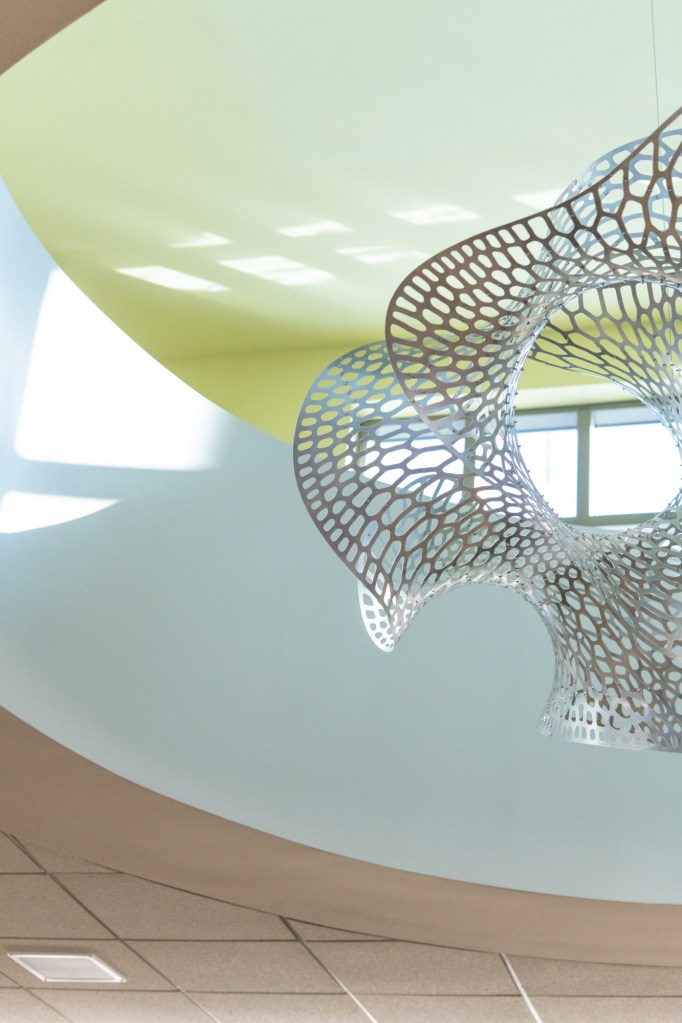

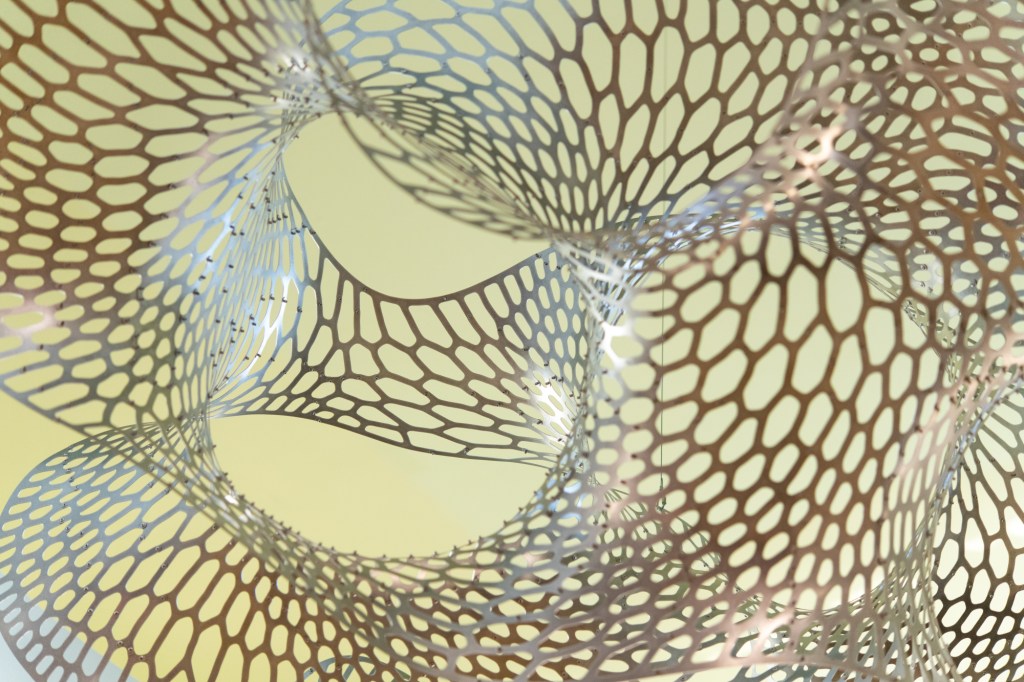
Nervous System
Corollaria Gyroid
Aluminum sheet, rivets
2023
The Corollaria Gyroid explores the connections between mathematics and the natural world, highlighting the presence of mathematical principles in biological structures. It is made up of 121 flat aluminum panels connected by 1789 rivets into a seamless, undulating surface perforated with a network of morphing cellular patterns. The surface represented is a gyroid, a minimal surface discovered in 1968 at NASA as a purely mathematical invention but which was later discovered in natural structures such as the scales of butterfly wings. The cellular filigree is inspired by the patterns seen in plant cross sections, bryozoans and the underside of bolete mushrooms. The design is generated via a computational system invented by the artists which breaks a surface into flat puzzle piece panels that can be assembled without any forming, jigs or instructions into a complex shape.
Dedicated to Alan Schoen, discoverer of the gyroid
Nervous System is a design studio that works at the intersection of art, science and technology. They create using a novel process that employs computer simulation to generate designs and digital fabrication to realize products.Drawing inspiration from natural phenomena, they write computer programs based on processes and patterns found in nature and use those programs to create unique art, jewelry, and housewares. Nervous System’s body of work includes product, fashion, software, art, architecture and biomedical research.
Founded in 2007, Nervous System is a collaboration between Jessica Rosenkrantz and Jesse Louis-Rosenberg who met while students at MIT. Jessica studied architecture and biology while Jesse studied math and computer science. Nervous System’s work is in the permanent collection of the Museum of Modern Art, the Cooper-Hewitt, Smithsonian Design Museum, the Museum of Fine Arts, Boston, and the Centre Pompidou. It has also been featured on the cover of Science and published in Nature Biomaterials. Their studio is located in Palenville, NY.
Concourse B
Photos by Beth Mickalonis

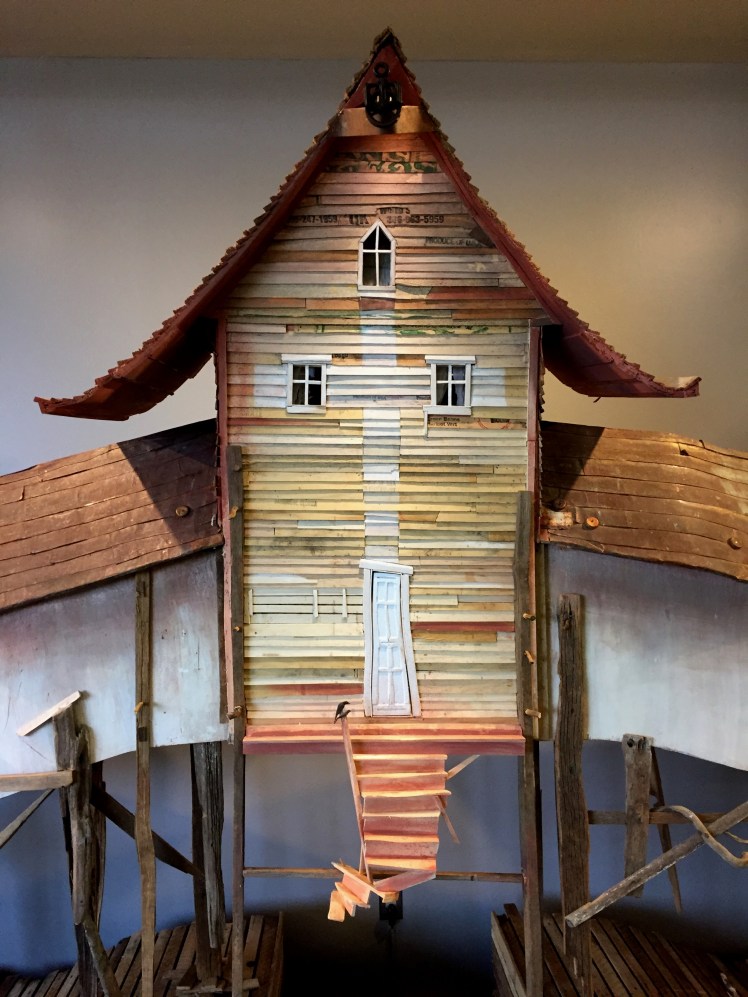


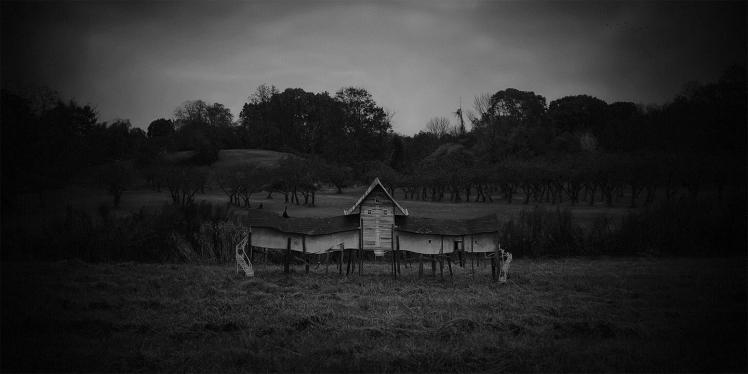
Robert Hite
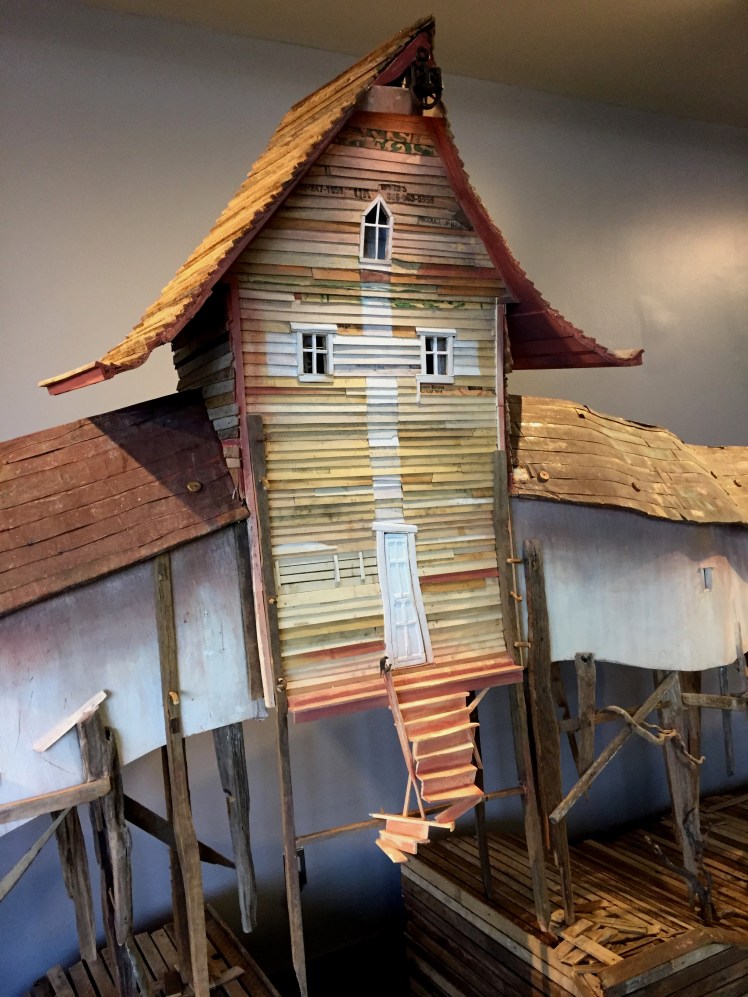
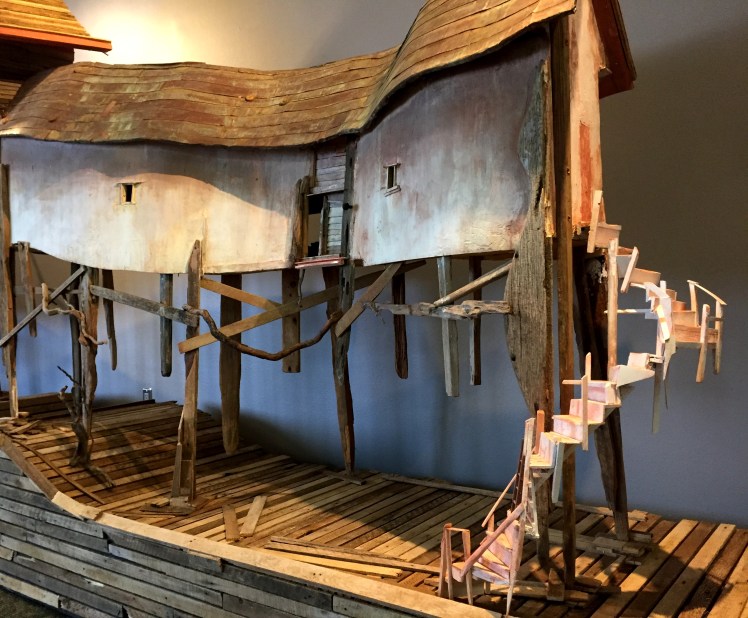
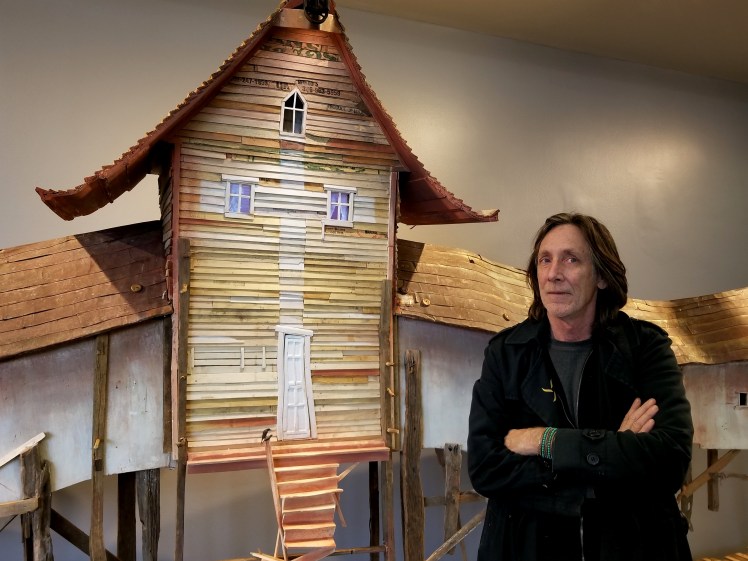
Migration House
Reclaimed wood and metal
2007-2017
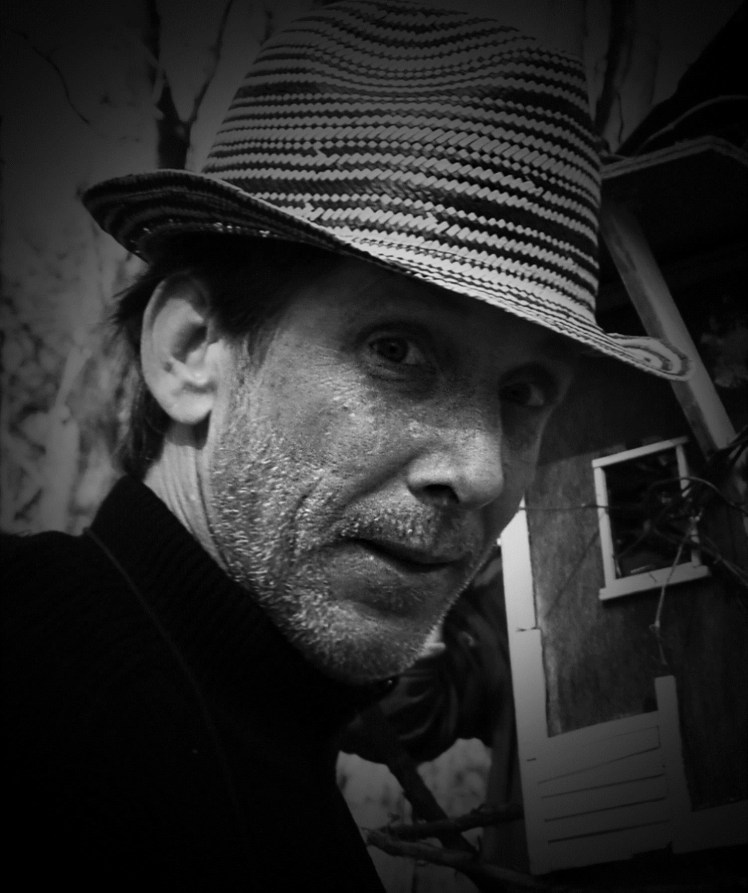
“In my youth, I would return at dusk from my forays along winding back roads, murky swamps and thick forest. I could then incubate my amazement at what exists in this life from the safety and sanctity of my home.”
We all seek that elusive dwelling place called home: a shelter that can provide refuge for dreams and aspirations as well as protection from the elements. Migration House reflects that longing for stability, along with the fragile impermanence that often accompanies the pursuit of home. Robert Hite carefully constructs his sculptures out of found and collected materials, and photographs them in various locations around the Hudson Valley. His rural southern upbringing and travels around the developing world inform his approach to architecture as a functional but poetic compilation of disparate available parts. The sculptures and lyrical, atmospheric photographs echo with the harsh necessities of poverty and transience, but also with resiliency and resourcefulness. Implied too in these rambling clusters and sharp-peaked towers is the habitation of a community, and the efforts of a collective to resist dissolution, the ravages of time and nature, rising together above the fray.
Concourse A
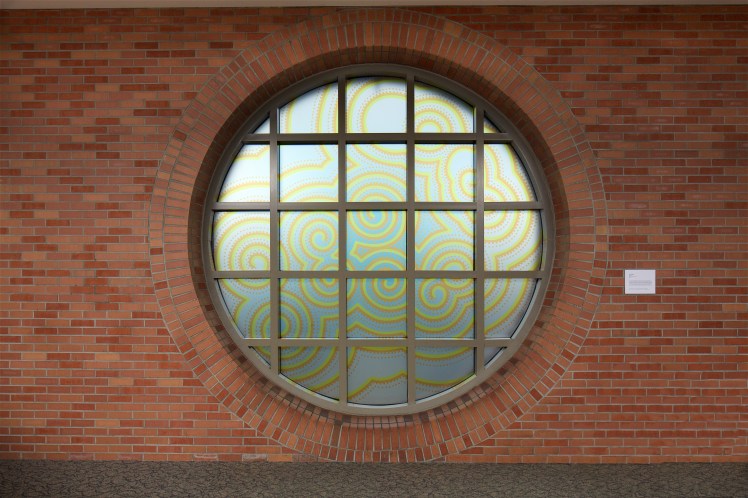
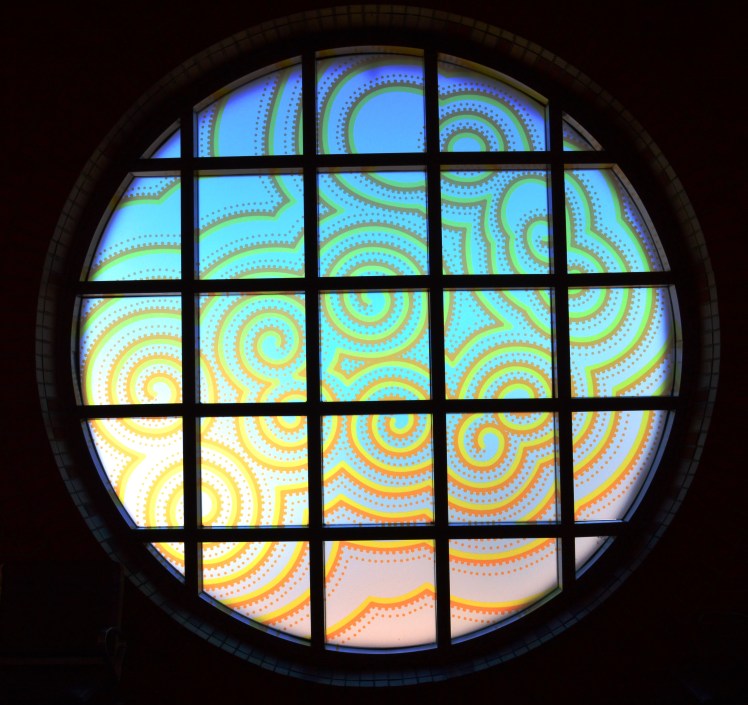
Joy Taylor
Coriolis
Digital print on vinyl
2016
Coriolis reveals a single moment in the birth of a cloud. It takes its title from the Coriolis Effect, which mathematically describes the spiral shapes of air molecules that result as the rotating earth spins, turning the atmosphere with it. As the molecules are constantly spun to the right, spirals form in the air, with small spirals growing and multiplying to fill our view. This same force is also responsible for other spiral forms found in nature, including growth patterns in plants and seashells. As travelers prepare to ascend into the ever-changing clouds, Joy Taylor offers them the chance to visualize the invisible forces at work in the sky.
Concourse B
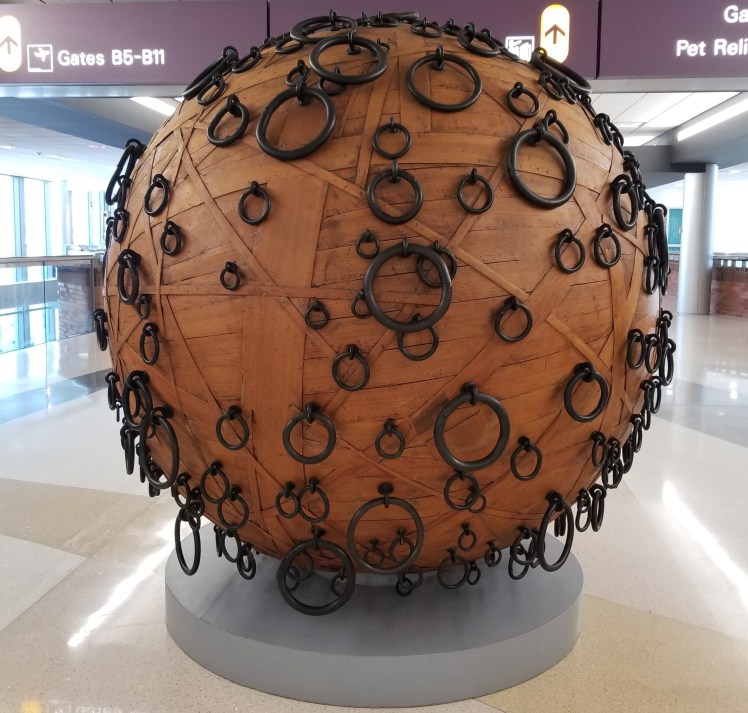

Dean Snyder
Lubber
Red cedar, iron rings
1994
Lubber, a sphere of laminated cedar veneer punctuated by hand-wrought iron rings, sits as a sentinel to the concourse. Lubber‘s title refers to a person that is out of sync with his environment, commonly known in the nautical expression, “land-lubber,” a person not acclimated to seafaring.
Concourse B, installed 2001

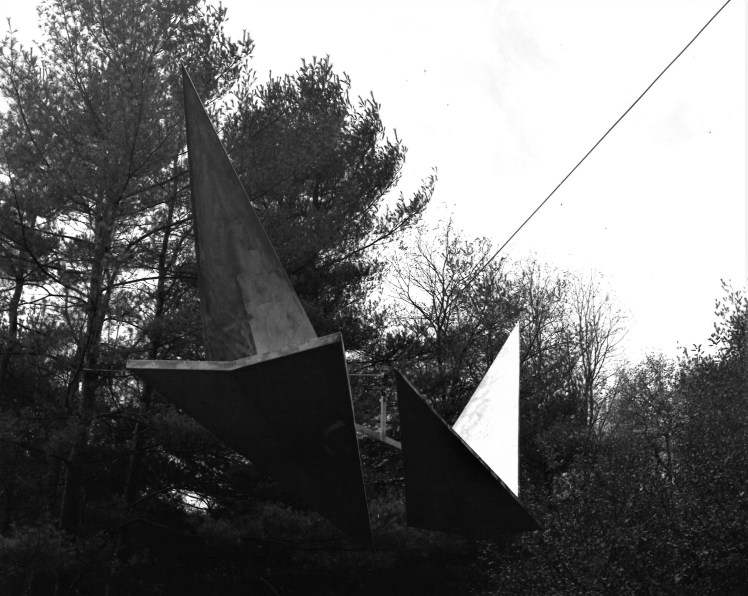
George Rickey
Four Triangles Hanging
Stainless Steel
1974
This piece has been removed temporarily for relocation.
George Rickey was one of the world’s foremost kinetic sculptors. His work consisted of tenuously balanced geometric steel constructions which combined linear elements and geometric forms moved by air currents and gravity. The artist’s primary interest was in the fluctuating relationships of these forms in shaping the space around them, rather than in the shapes themselves.
Rickey’s work is still represented in major museums throughout the world. Four Triangles Hanging was previously exhibited at the Solomon R. Guggenheim Museum, in 1979 and the Worcester Art Museum, in 1983. From 1960 until his death in 2002 George Rickey resided and worked in East Chatham, Columbia County, NY.
Concourse B
 Albany International Airport Art & Culture Program